


[챕터1] 윌리엄 코빙
KOR
ENG
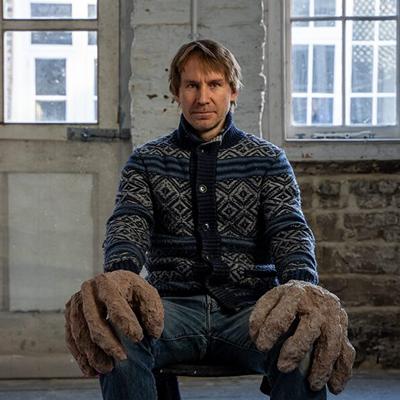
윌리엄 코빙은 움직이는 영상과 굽지 않은 점토를 결합하고, 이를 ‘비디오와 점토의 충돌’이라고 설명합니다. 작가에게 점토는 완전히 통제되는 재료가 아닙니다. 몸과 맞닿아 눌리고 처지며 계속 형태를 바꾸고, 작가와 재료는 서로 영향을 주고받습니다.
입구에서 먼저 만나는 〈흑요석의 기록〉을 살펴보세요. 거대한 점토 손이 스마트폰 화면을 연상시키는 거울을 움켜쥐고 있고, 거울 가장자리도 점토로 둘러싸여 있습니다. 거울 앞에 서면 자신의 모습이 그 안에 비치면서, 작품을 바라보던 관람객이 어느새 거대한 손에 붙들린 존재처럼 보입니다.
왼쪽 방으로 들어가면 〈떨어지는 시선〉을 만날 수 있습니다. 작가는 거대한 점토 두상 안으로 들어가 눈 부위를 도려내고, 그 자리를 손이 점토를 만지는 장면과 하늘, 물결 등이 흐르는 영상으로 채웠습니다. 눈이 있던 자리를 들여다보세요. 눈을 없애는 행위가 오히려 새로운 시야를 여는 역설적인 장면이 됩니다.
그 맞은편 벽의 〈대지의 내면〉에서는 관람객의 몸도 작품의 일부가 됩니다. 성인은 몸을 숙이고, 아이는 발판 위에 올라서야 안쪽 화면을 볼 수 있습니다. 작품을 보기 위해 자세를 바꾸는 순간, 관람은 단순히 눈으로 보는 일을 넘어 몸으로 경험하는 일이 됩니다.
그리고 그 뒤편에는 세 편의 퍼포먼스 영상이 이어집니다. 화면 속 점토는 손과 몸에 눌리고 밀리며 끊임없이 형태를 바꿉니다. 질척이는 표면과 점토의 무게감, 흙을 주무르는 소리, 반복되는 몸짓에 주목해 보세요. 눈으로 보는 영상인데도 마치 점토를 직접 만지는 듯한 감각이 전해집니다.
거울 앞에 서고, 눈이 있던 자리를 들여다보고, 몸을 낮추고, 화면 속 점토의 움직임과 소리에 귀 기울이는 동안, 관람객은 점토를 눈으로만 보는 재료가 아니라 몸으로 느끼는 살아 있는 물질로 다시 만나게 됩니다.
William Cobbing brings together moving images and unfired clay in what he describes as a “collision between video and clay.” For Cobbing, clay is never a material that can be fully controlled. It responds to contact with the body, becoming pressed and distorted, sagging under its own weight, and continually changing shape as the artist and the material shape one another.
The first work you encounter is Obsidian Tomb. Look at the enormous clay hand gripping a mirror that resembles the screen of a smartphone. Clay also wraps around the edges of the mirror. Stand in front of it and you’ll see your own reflection, suddenly seeming to become a figure caught in the grasp of the giant hand.
In the room to the left, you’ll find Eye Fall. Cobbing entered the massive clay head and carved away the eye area, filling the opening with moving images of hands touching clay, along with views of the sky and rippling water. Look into the space where the eyes once were. By removing the eyes, the work paradoxically opens up a new way of seeing.
On the opposite wall, Terra Cave brings your own body into the experience. Adults have to bend down, while children step onto a platform to see the screen inside. The moment you adjust your posture to view the work, looking becomes more than a visual act—it becomes a physical experience.
Behind these works, three performance videos continue the exploration. On screen, clay is pressed and pushed by hands and bodies, constantly changing shape. Notice the wet, tactile surfaces, the weight of the clay, the sounds of it being kneaded, and the repeated movements of the body. Although you are watching a video, the experience can feel almost as if you were touching the clay yourself.
As you stand before the mirror, peer into the space where the eyes once were, lower your body, watch the clay move, and listen to its sounds on screen, clay becomes more than something to look at. It emerges as a living material experienced through the whole body.

